What is Tawaf, Why do we walk around the Ka'bah? Here is a very basic reply.
Allah Almighty says:

"And He it is Who created the night and the day, and the sun and the moon, each in an orbit floating." (Al-Anbiya, 21: 33)
This glorious verse refers to a scientific fact concerning the system of the universe. Scientific discoveries have proved that we live in a huge universe that depends on revolution.
The earth revolves round the sun once a year, the moon revolves around the earth once per lunar month, and the other planets of the solar system also revolve round the sun, each in its own orbit. Besides, most of these planets have moons that revolve around them, each, also in its own orbit. Astronomers have discovered more than 60 of these moons so far.
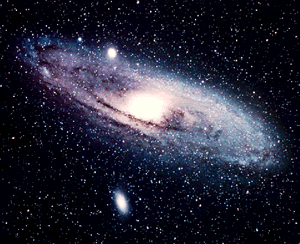
The solar system, likewise, orbits a center of our galaxy, the Milky Way. This galaxy consists of more than 130 billion stars. Galaxies, in turn, revolve round a center that only Almighty Allah knows.
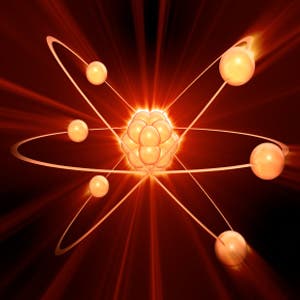
The law of revolution applies also to atoms, the smallest units of elements that cannot be seen even by microscopes. An atom is composed of a nucleus whose diameter is less than a millionth of a millimeter. An atom is surrounded by electrons that move round the atom in an orbit.
Since all matter in the universe-whether solid, liquid, or gaseous consists of atoms, this means that the law of revolution applies to everything: stars, planets, moons, animals, plants, sand, seas, air, and so on.
This includes cells as well. The cytoplasm in the cell moves around the nucleus.
There is a common factor between the orbital movements of all the objects referred to above, this is, and their revolution is anti-clockwise.
Contemplating the above lines, we come to realize that revolution is a cosmic law.
With a believer's meditation upon such a scientific fact, another image of revolution is brought to one's mind:The pilgrim's circumambulation of the Kaaba, which is a basic ritual of Hajj in Islam.
Circumambulating the Kaaba is a symbolic act of worship, whose wisdom may be hidden from some. It indicates the believer's utter submission to Almighty Allah alone. The pilgrims go to Hajj in response to the divine order that Prophet Ibrahim (peace be upon him) conveyed to people.
Allah Almighty says:
"And (remember) when We showed Ibrahim the site of the (Sacred) House (the Kaaba at Makkah), saying: Ascribe not anything (in worship) with Me, and sanctify My House for those who circumambulate it, and those who stand up (for prayer), and those who bow (submit themselves with humility and obedience to Allah), and make prostration (in prayer). And proclaim to mankind the Hajj (pilgrimage). They will come to you on foot and on every lean camel, they will come from every deep and distant (wide) mountain highway (to perform Hajj)." (Al-Hajj, 22:26-27).
This signifies that the Kaaba is the spiritual center of the believers. It refers to the close bond that should be between a believer and his Lord. A believer turns toward the Kaaba five times a day during the prescribed ritual Prayers.
A pilgrim circumambulates the Kaaba as if he or she is a celestial body orbiting another greater body.
Circumambulation of the Kaaba is to be performed anti-clockwise. This indicates that there is a joint factor between a pilgrim's expressing his ultimate faith in Almighty Allah by circumambulating the Kaaba in that way and between the cosmic laws of revolution discussed above. This indicates that there is consistency between the obligations of worship in Islam and the natural laws that govern the universe, which indicates that they all belong to only one source, that is, Almighty Allah.
This proves the truthfulness of the call of Islam that there is no god but Almighty Allah. Thus, Islam is the true religion that provides humankind with a comprehensive view in conformity with the divine truth that is apparent in the natural laws of the universe.
Tawaf: Utmost degree of love
Circumambulation means to go round something. This act shows the utmost degree of love to the extent that a lover wishes to sacrifice himself for the beloved. A real pilgrim who has thirst for meeting his Beloved has been detached from everything. By going round the House of the Beloved, he wishes to prove that he desires nothing but God.
The planets circumambulate the sun, for they take everything from it. Inside an atom, the electrons circumambulate the protons. The whole universe ranging from the invisible particles to the planets and galaxies circumambulate. Man, being a part of the universe, should circumambulate, too, with the difference that the planets circumambulate in a compulsory way according to the laws of nature, but man, the rational being and possessor of free will, circumambulates with his logic and will a House God has appointed to honor human beings. Hence, it is natural for Muslims to offer their prayers, to sit, to stand, to recite the Holy Quran, to sleep, to lie down at the moment of death, to be put in a grave, and finally to be in that direction during their lifetimes and death.
"Say: Surely my prayer and my sacrifice and my life and my death are all for Allah, the Lord of the worlds." (Al-Anaam, 6:162)